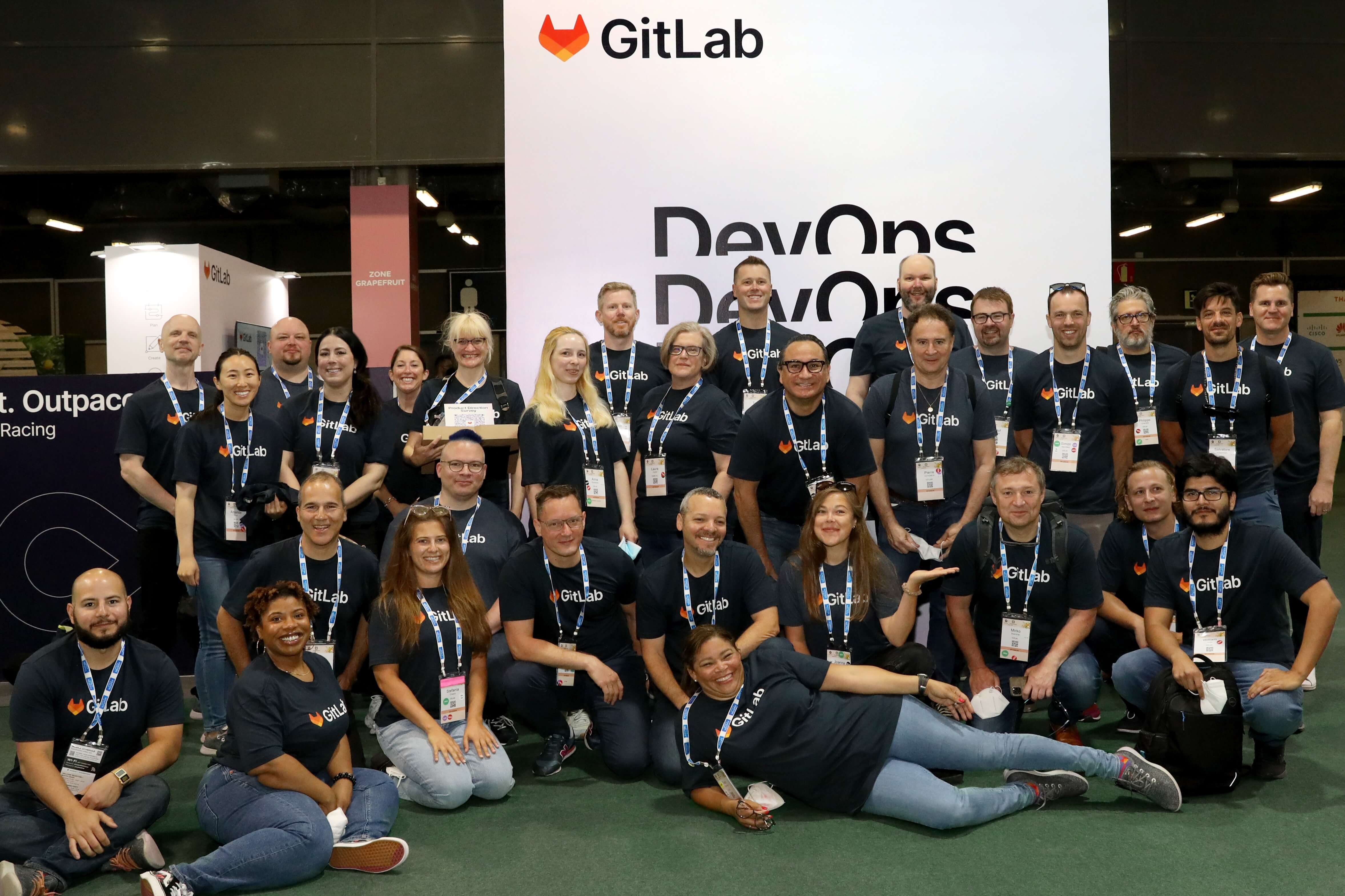
GitLab Inc. is a company based on the GitLab open-source project. GitLab is an application to code, test, and deploy code together. It provides Git repository management with fine grained access controls, code reviews, issue tracking, activity feeds, wikis, and continuous integration.
GitLab Inc. has 4 product offerings:
GitLab Inc. also offers:
GitLab is a community project, over 1000 people worldwide have contributed to GitLab! GitLab Inc. is an active participant in this community, trying to serve its needs and lead by example. For more information see Our stewardship of GitLab CE further down this page.
In 2011 Dmitriy was unsatisfied with the options for git repository management. So together with Valery, he started to build GitLab as a solution for this. This commit was the very start of GitLab.
Sid saw GitLab for the first time and thought it was natural that a collaboration tool for programmers was an open source so you could contribute to it. Being a Ruby programmer he checked out the source code and was impressed with the code quality of GitLab after more than 300 contributions in the first year. He asked Hacker News if they were interested in using GitLab.com and hundreds of people signed up for the beta. In November 2012, Dmitriy made the first version of GitLab CI.
Large organizations running GitLab asked Sid to add features that they needed. At the same time Dmitriy tweeted out to the world that he wanted to work on GitLab full time. Sid and Dmitriy teamed up and introduced GitLab Enterprise Edition with the features asked for by larger organizations.
In 2014 GitLab was officially incorporated as a limited liability corporation. GitLab released a new version every month on the 22nd, just as every year before and after. The first release of the year at January 22nd: GitLab 6.5. At the end of 2014, December 2014, GitLab 7.6 was released.
In the very start of 2015, almost the entire GitLab team flew over to Silicon Valley to participate in Y Combinator. We graduated in March of 2015 and had 9 people on our team.
In 2016 the number of people that contributed to GitLab grew to more than 1000. More than 100,000 organizations and millions of users are using GitLab. Our team grew with 100 people to more than 140. In September we announce our master plan and raising $20m in our B round of financing.
At GitLab we have one vision. Everyone can contribute to all digital content. For more information see the our strategy.
Our Tanuki logo symbolizes this with a smart animal that works in a group to achieve a common goal. Please see our press page to download the logo.
Please see the values section in our handbook.
GitLab Inc. is a for profit company that balances the need to improve GitLab Community Edition (CE) with the need to add features to GitLab Enterprise Edition (EE) exclusively in order to generate income. We have an open core business model and generate almost all our revenue with subscriptions to use Enterprise Edition. We recognize that we need to balance the need to generate income and with the needs of the open source project.
We promise that:
When we make new features we ask ourselves, is this feature more relevant for organizations that have more than 100 potential users? If the answer is yes the feature is likely to be exclusive to EE.
There are no features that are only useful to larger organizations, so for every EE features there will be smaller organizations that also need it. We're not saying that there are no small organizations that need the EE feature, just that we think that larger organizations are more likely to need it.
It is hard to get CE vs. EE right, and if we put something in EE that should be in CE we won't hesitate to open-source it.
We always make sure that CE can do all major features in our scope and there are companies using CE with more than 10,000 users.
If people ask us why a certain feature is EE only we might reply with a link to this section of the handbook. We do not mean to imply you don't need the feature. It implies we think the feature will be more relevant for larger organizations. Feel free to make the argument for the opposite, we're listening.
See the definition of EE Premium features in our product handbook.
Sometimes people suggest having features in EE for a limited time. An example of a limited time release strategy is the Business Source License that keeps features propietary for 3 years. At GitLab we want to give everyone access to most of the features (and all the essential ones) at the date they are announced. We want people the option to both run and contribute to an open source edition that is maintained and that includes the most recent security fixes. From time to time we do open source a feature that used to be EE only. We do this in case when in hindsight we realize we made a mistake applying our criteria. An example is when we learned that a branded homepage was an essential feature. Another example is when we brought GitLab Pages to the Community Edition.
Apart from making new features GitLab Inc. does a lot of work that benefits both CE and EE:
When someone contributes a feature to CE that is already in EE we have a hard decision to make. We hope that people focus on contributing features that are neither in CE nor EE. This way both edits benefit from a new feature and GitLab Inc. don't have to make a hard decision. The features we plan to build for EE are shared on our direction page and we welcome people to contribute features to CE that are planned for future EE releases, if you pick one from the upcoming release please ask in the issue if someone is already working on it. When someone does contribute a feature to CE that is already in EE we weigh a couple of factors in that decision:
We'll weight all factors and you can judge our stewardship of CE based on the outcome. So far (July 22, 2016) we had only two cases, one had low code quality and the other one copied the EE code down to the last space. If you find these or other examples please link them here so people can get an idea of the outcome.
In case we're not sure, we'll consult with the core team to reach a conclusion.
If you're interested, most of our internal procedures can be found in publicly viewable handbooks.
Some people contact us because they would like to donate to GitLab. If you have time to give please help spread the word about GitLab by mentioning us and/or contribute by creating and reviewing issues and merge requests. If you would like to give money please donate to Rails Girls Summer of Code in our name.
GitLab is a community project with people participating from all over the world. GitLab Inc. has people in three continents to serve our customers better. Most of our customers are in the United States.
Most of our team is distributed. We're proud to be working remotely, using GitLab Issues to coordinate. We have a Remote Manifesto, our team members have shared their experiences in our blog and did a Q&A for Remote.co. You can taste a bit of the GitLab team culture by visiting our culture page.