Published on: January 8, 2026
5 min read
How IIT Bombay students are coding the future with GitLab
At GitLab, we often talk about how software accelerates innovation. But sometimes, you have to step away from the Zoom calls and stand in a crowded university hall to remember why we do this.


The GitLab team recently had the privilege of judging the iHack Hackathon at IIT Bombay's E-Summit. The energy was electric, the coffee was flowing, and the talent was undeniable. But what struck us most wasn't just the code — it was the sheer determination of students to solve real-world problems, often overcoming significant logistical and financial hurdles to simply be in the room.
Through our GitLab for Education program, we aim to empower the next generation of developers with tools and opportunity. Here is a look at what the students built, and how they used GitLab to bridge the gap between idea and reality.
The challenge: Build faster, build securely
The premise for the GitLab track of the hackathon was simple: Don't just show us a product; show us how you built it. We wanted to see how students utilized GitLab's platform — from Issue Boards to CI/CD pipelines — to accelerate the development lifecycle.
The results were inspiring.
The winners
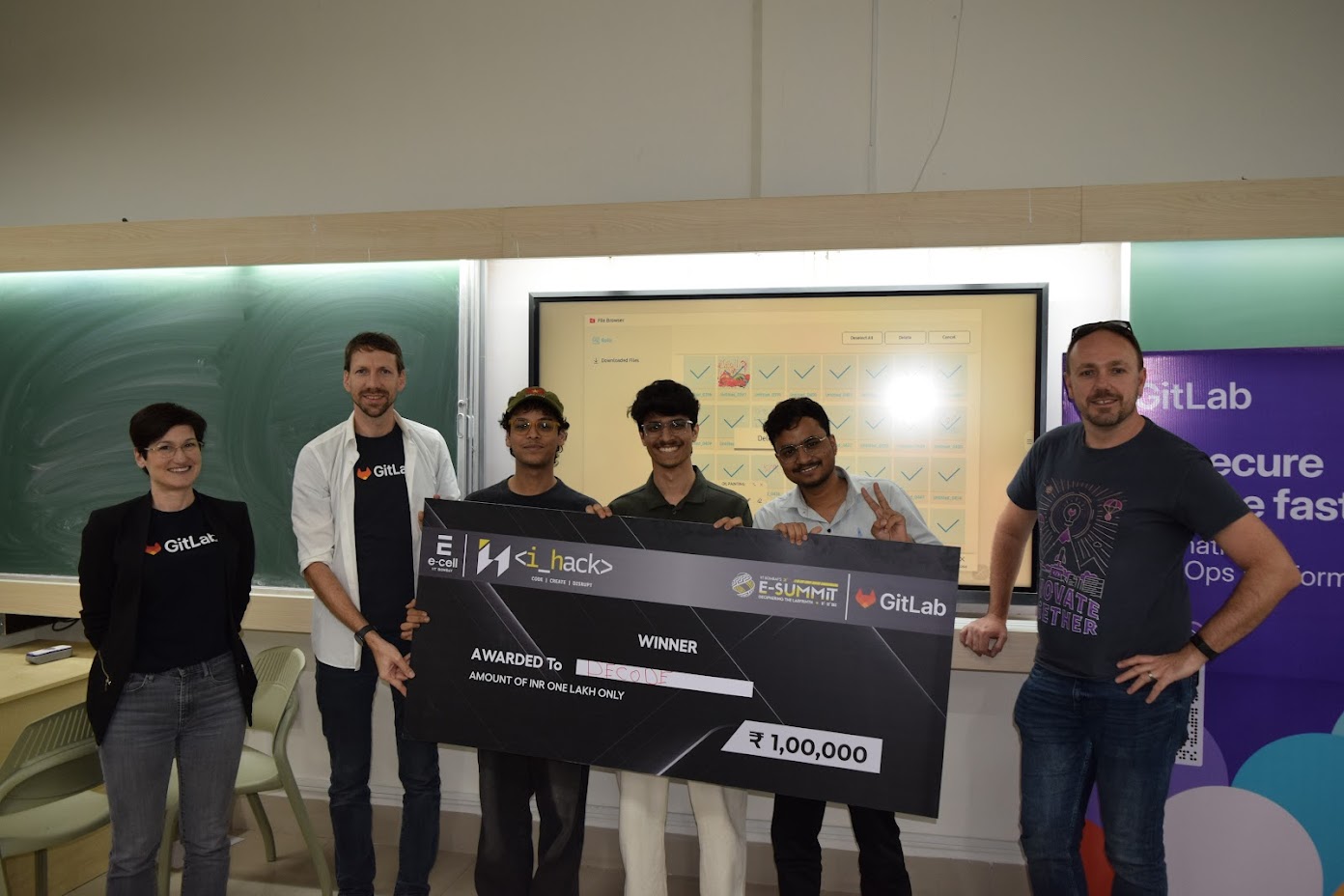
1st place: Team Decode — Democratizing Scientific Research
Project: FIRE (Fast Integrated Research Environment)
Team Decode took home the top prize with a solution that warms a developer's heart: a local-first, blazing-fast data processing tool built with Rust and Tauri. They identified a massive pain point for data science students: existing tools are fragmented, slow, and expensive.
Their solution, FIRE, allows researchers to visualize complex formats (like NetCDF) instantly. What impressed the judges most was their "hacker" ethos. They didn't just build a tool; they built it to be open and accessible.
How they used GitLab: Since the team lived far apart, asynchronous communication was key. They utilized GitLab Issue Boards and Milestones to track progress and integrated their repo with Telegram to get real-time push notifications. As one team member noted, "Coordinating all these technologies was really difficult, and what helped us was GitLab... the Issue Board really helped us track who was doing what."
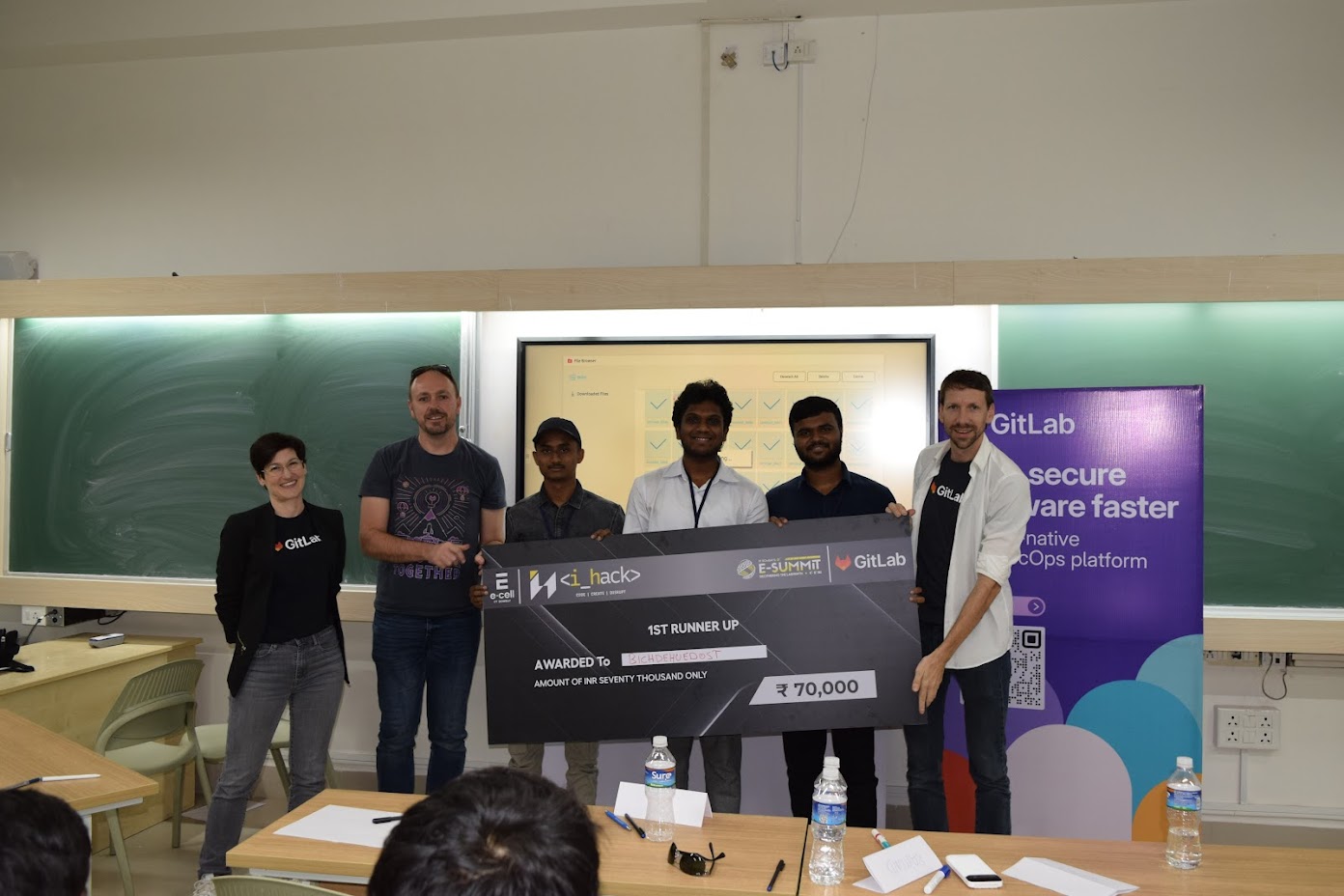
2nd place: Team BichdeHueDost — Reuniting to Solve Payments
Project: SemiPay (RFID Cashless Payment for Schools)
The team name, BichdeHueDost, translates to "Friends who have been set apart." It's a fitting name for a group of friends who went to different colleges but reunited to build this project. They tackled a unique problem: handling cash in schools for young children. Their solution used RFID cards backed by a blockchain ledger to ensure secure, cashless transactions for students.
How they used GitLab: They utilized GitLab CI/CD to automate the build process for their Flutter application (APK), ensuring that every commit resulted in a testable artifact. This allowed them to iterate quickly despite the "flaky" nature of cross-platform mobile development.
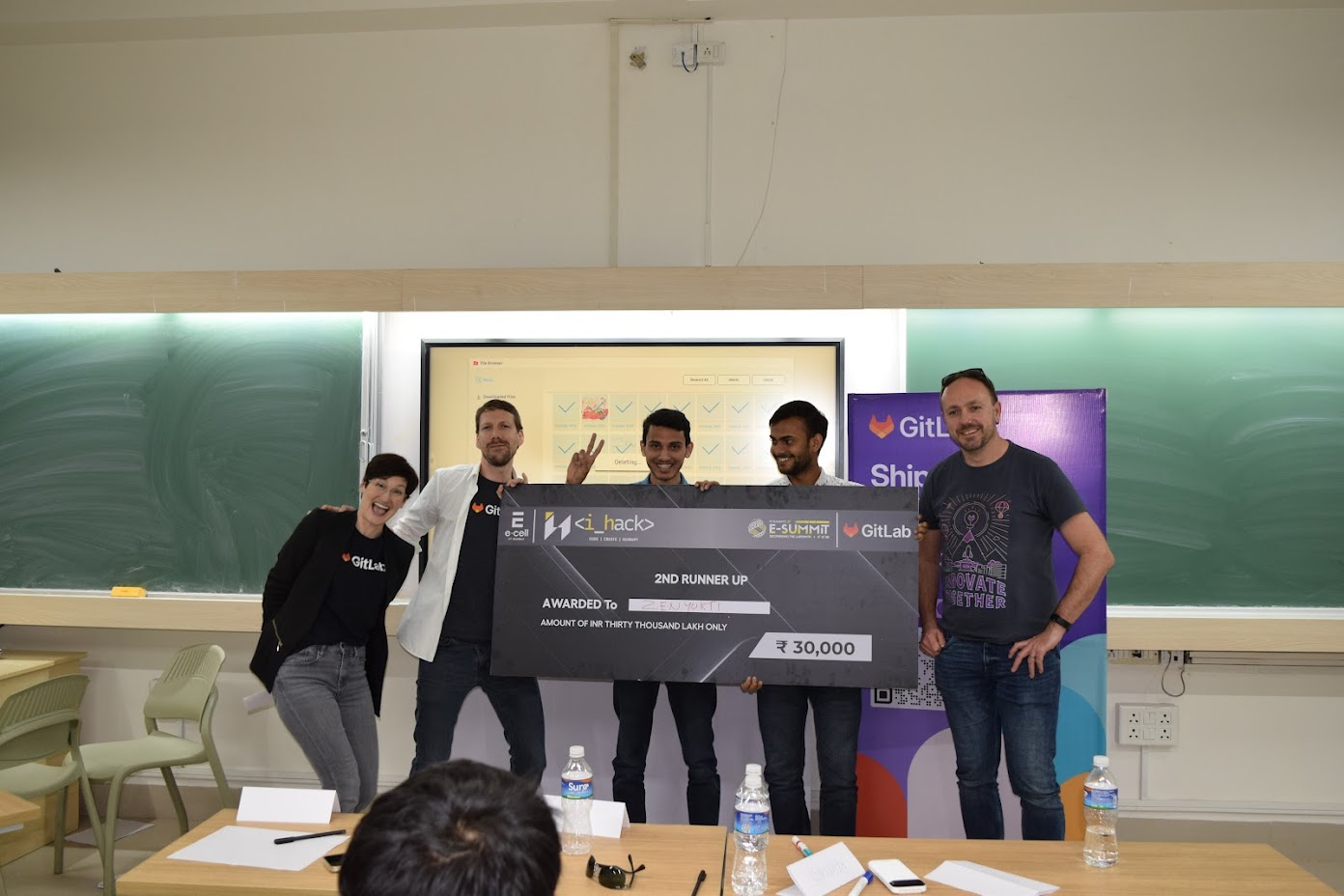
3rd place: Team ZenYukti — Agentic Repository Intelligence
Project: RepoInsight AI (AI-powered, GitLab-native intelligence platform)
Team ZenYukti impressed us with a solution that tackles a universal developer pain point: understanding unfamiliar codebases. What stood out to the judges was the tool's practical approach to onboarding and code comprehension: RepoInsight-AI automatically generates documentation, visualizes repository structure, and even helps identify bugs, all while maintaining context about the entire codebase.
How they used GitLab: The team built a comprehensive CI/CD pipeline that showcased GitLab's security and DevOps capabilities. They integrated GitLab's Security Templates (SAST, Dependency Scanning, and Secret Detection), and utilized GitLab Container Registry to manage their Docker images for backend and frontend components. They created an AI auto-review bot that runs on merge requests, demonstrating an "agentic workflow" where AI assists in the development process itself.
Beyond the code: A lesson in inclusion
While the code was impressive, the most powerful moment of the event happened away from the keyboard.
During the feedback session, we learned about the journey Team ZenYukti took to get to Mumbai. They traveled over 24 hours, covering nearly 1,800 kilometers. Because flights were too expensive and trains were booked, they traveled in the "General Coach," a non-reserved, severely overcrowded carriage.
As one student described it:
"You cannot even imagine something like this... there are no seats... people sit on the top of the train. This is what we have endured."
This hit home. Diversity, Inclusion, and Belonging are core values at GitLab. We realized that for these students, the barrier to entry wasn't intellect or skill, it was access.
In that moment, we decided to break that barrier. We committed to reimbursing the travel expenses for the participants who struggled to get there. It's a small step, but it underlines a massive truth: talent is distributed equally, but opportunity is not.
The future is bright (and automated)
We also saw incredible potential in teams like Prometheus, who attempted to build an autonomous patch remediation tool (DevGuardian), and Team Arrakis, who built a voice-first job portal for blue-collar workers using GitLab Duo to troubleshoot their pipelines.
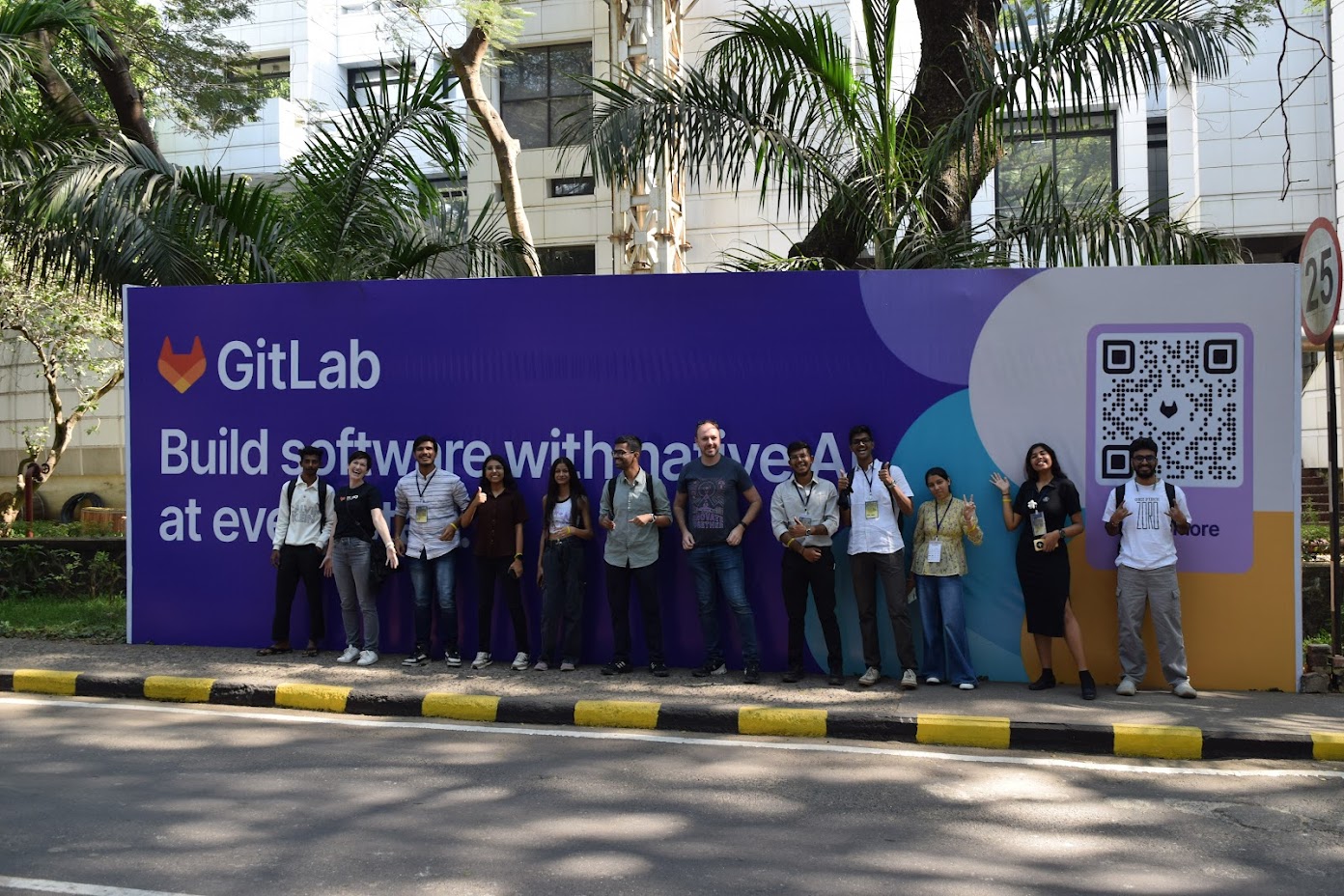
To all the students who participated: You are the future. Through GitLab for Education, we are committed to providing you with the top-tier tools (like GitLab Ultimate) you need to learn, collaborate, and change the world — whether you are coding from a dorm room, a lab, or a train carriage. Keep shipping.
💡 Learn more about the GitLab for Education program.
More to explore
View all blog posts


We want to hear from you
Enjoyed reading this blog post or have questions or feedback? Share your thoughts by creating a new topic in the GitLab community forum.
Share your feedback