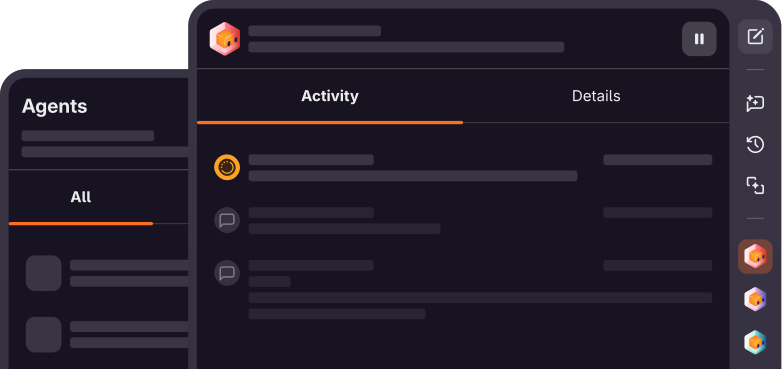
Change Impact
What breaks if I change this service?
Full blast radius: every direct caller, downstream dependency, pipeline, and owner across every repo in your org, in a single tool call.

Higher agent accuracy,
lower token cost
GitLab Orbit is the context graph for your entire software lifecycle, with your permissions intact. In GitLab testing, agents on Orbit made up to 45x fewer retries.
GitLab Orbit
Higher agent accuracy, lower token cost
Your hardest questions, answered right the first time
Fewer retries means fewer tokens, and a smaller bill for the same work.


GitLab Duo Agent Platform and external agents reason across relationships, not fragments, so they resolve issues instead of surfacing incomplete answers.
One graph query replaces the dozens of API calls, auth handoffs, and manual investigation that agents and engineers do today. What used to take hours of cross-team coordination happens in seconds.
Agents get the context they need in one query instead of dozens of round trips. Less retrieval overhead, more compact responses, and zero wasted cycles at any scale.
Questions you couldn’t answer before
Answering these questions used to require hours of manually digging through repos. With Orbit, you get answers faster.
Change Impact
Full blast radius: every direct caller, downstream dependency, pipeline, and owner across every repo in your org, in a single tool call.
Org Intelligence
Cross-repo dependency mapping at org scale. Discover which services call which, which repos share infrastructure, and which teams own what.
Pipeline Hygiene
The map includes chains across thousands of projects. Find who's missing required security scans, who's still on a deprecated template, and who's diverged from the golden pipeline.
Disaster Recovery
Generate a complete service dependency graph before an infrastructure migration. Know exactly what touches what so there are no surprises when you flip the switch.
Onboarding
New engineers get an instant, queryable map of the entire org: who owns what, how services connect, what's safe to change. Onboarding in days, not weeks.
Vulnerability Tracing
Trace a vulnerable function, library, or pattern across every repo and namespace. Get a full impact list with owners in seconds.
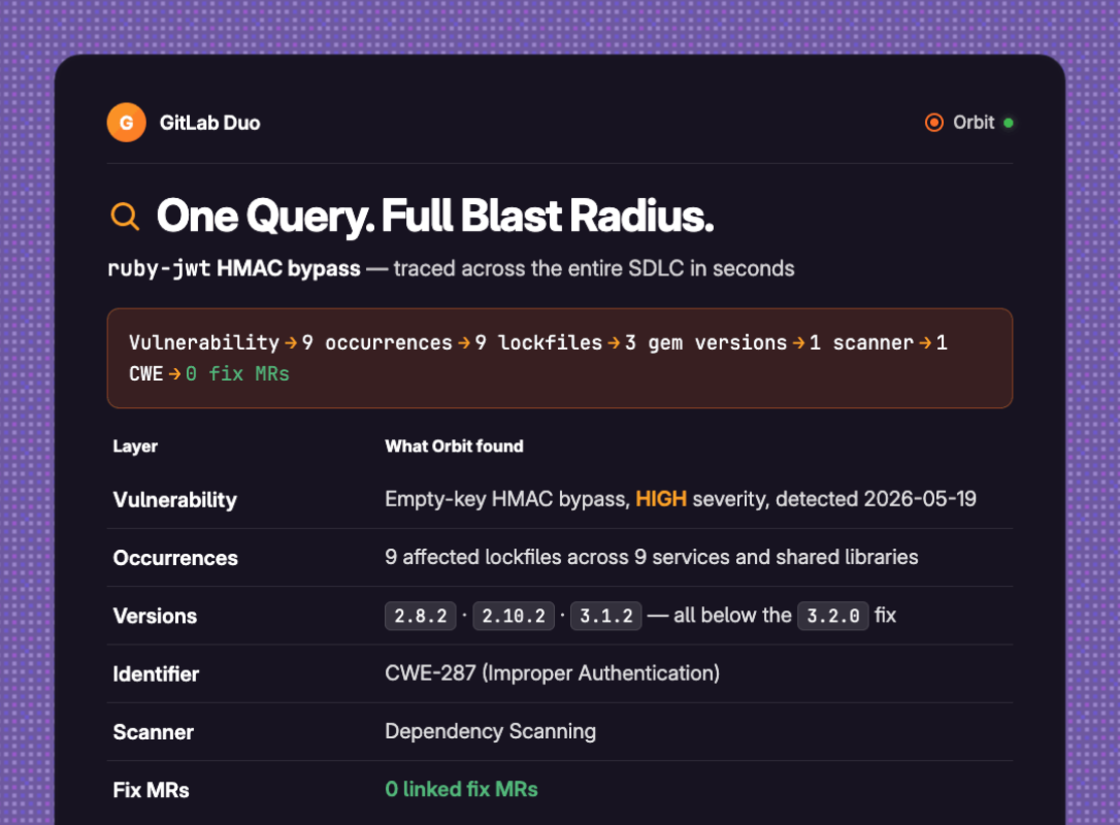
Security
Trace a vulnerability across your full system in one query. Get a clear blast radius and prioritized list of owners to act on.
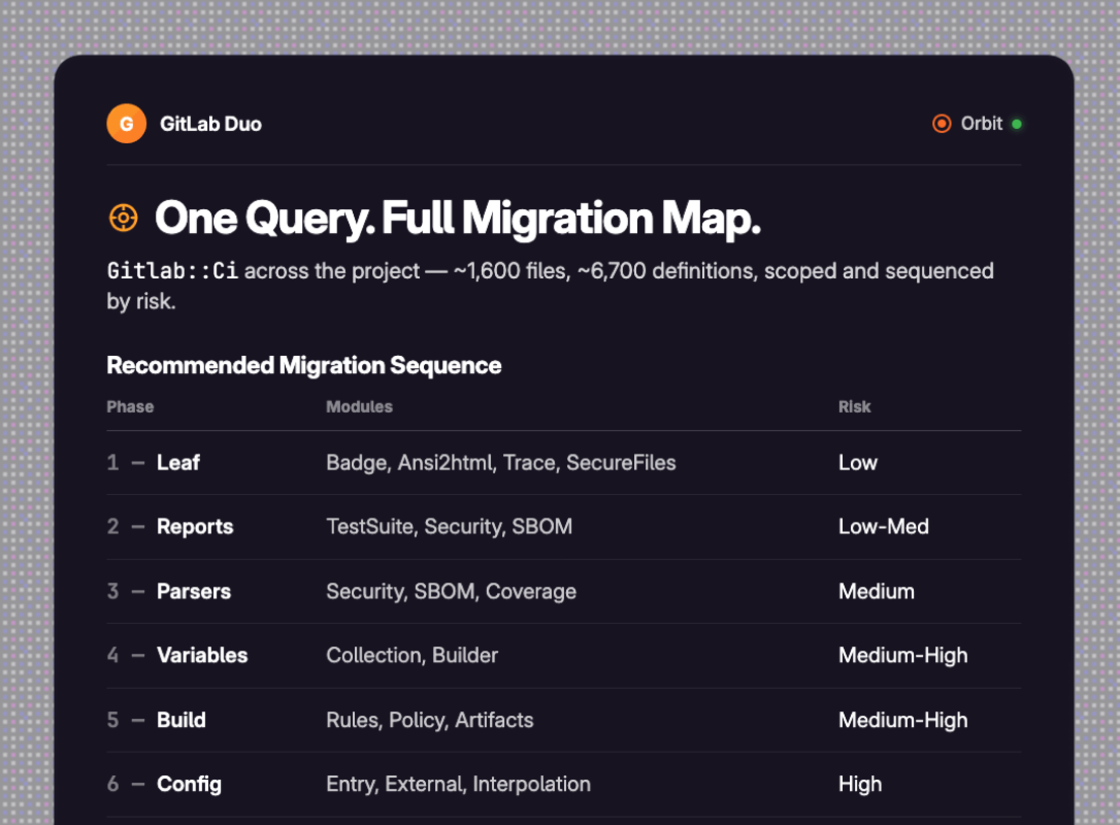
DevOps
Query a live graph of your system before you push. Surface hidden dependencies and pipeline issues early, before they break CI/CD.
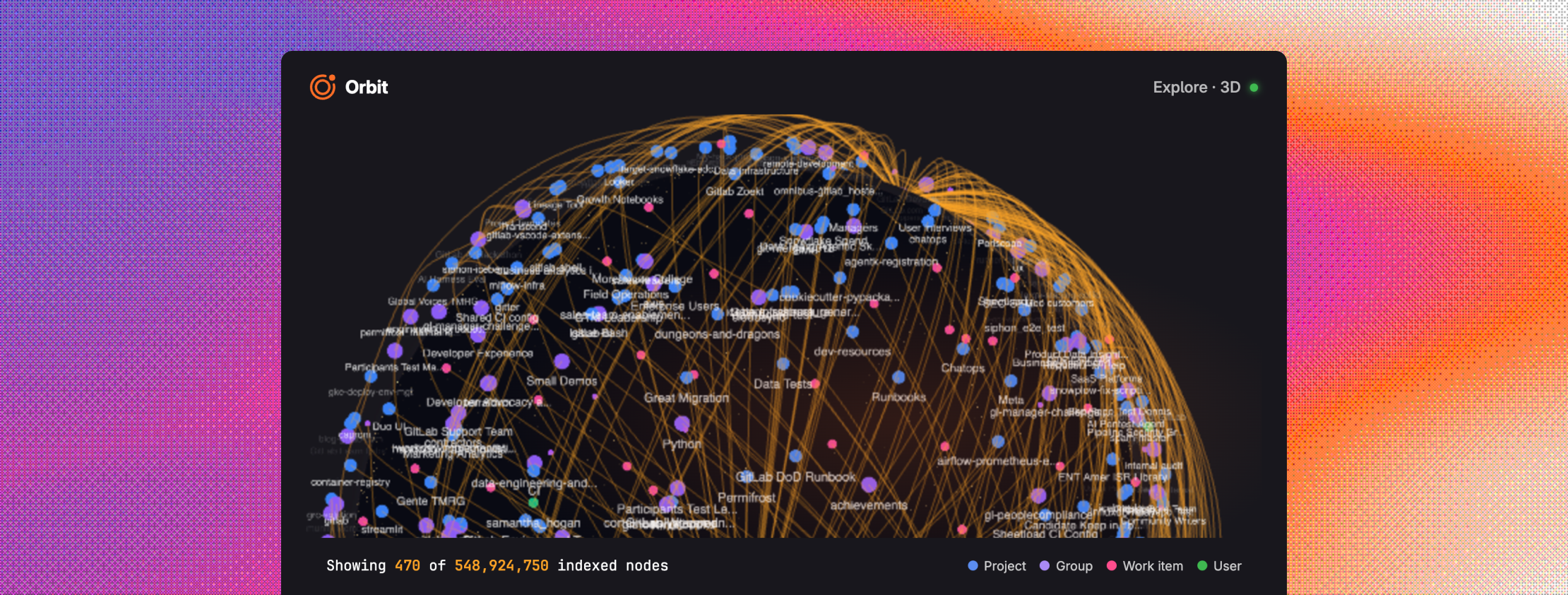
AI Orchestration
Give migration agents one current view of how your system actually works, so they can scope blast radius and sequence changes safely.
Cut down on AI query overhead
Without a graph, every AI query carries overhead that compounds at enterprise scale: API sprawl, auth on every hop, and context windows stuffed with irrelevant code.
Without Orbit
N API calls per query: One per repo, one per file type, one per service. Each hop adds latency and error surface.
Auth on every hop: Model Context Protocol auth, repo auth, service auth. Each adds round-trip latency.
Context window bloat: Thousands of irrelevant lines loaded to find one relationship.
LLM inference on structure: The model guesses missing edges. Error compounds with every hop. Answers drift from truth.
With Orbit
One call, one query_graph: A single MCP tool, all data in one structured response regardless of depth.
Graph-level auth: One namespace-scoped token. Zero per-service overhead. No auth sprawl.
Exact nodes and edges only: Orbit returns only what was requested. No context waste, no irrelevant files.
Indexed facts, not inference: Traversal follows real, pre-indexed edges. The same query returns the same answer every time.
Tested, not claimed
Same task. Same model. With and without Orbit.
Two Claude Code agents get the same task on GitLab. One can ask Orbit. The other has text search. Both answers are checked against the running codebase.
Text search only
$ rg "BasePolicy" app/ ee/$ rg "include Gitlab::Allowable"Read app/policies/project_policy.rb$ rg "class .* < .*Policy"Read ee/app/policies/ee/group_policy.rb$ grep -r "canAdmin" app/assets/javascriptsCrawls file by file and guesses at the relationships it can't see.
Graph queries
$ orbit sql --repo . "WITH RECURSIVE policies AS (…)"$ orbit sql --repo . "SELECT … FROM gl_imported_symbol …"Asks the graph directly and follows real, indexed edges.
Up to 11x faster
Time from prompt to a finished answer
Up to 4.5x fewer tokens
Total tokens used to finish the same task
Up to 45x fewer retries
Fewer wrong answers the agent has to go back and fix
Source: GitLab internal testing with Orbit Observatory, an evaluation harness comparing Claude Code with and without GitLab Orbit on the same tasks and model. Results vary by workload.
Bring the agents you already use
Orbit natively supports GitLab Duo Agent Platform and your favorite external agents such as Claude Code and Codex via open Model Context Protocol (MCP).
Native
Agents query Orbit for a system-wide view across code, merge requests, work items, pipelines, and vulnerabilities.
Model Context Protocol
Two MCP tools give complete graph access: query_graph and get_graph_schema. Connect in minutes. One shared query pool, org-wide.
REST · CLI
Full REST API at /api/v4/orbit/query and glab orbit query CLI for direct integration or custom tooling.
Use left and right arrow keys to navigate quotes. Swipe on touch devices.
Quote 1 of 1