
Modern software development teams face a critical challenge: How do you maintain velocity while ensuring code quality, security, and consistency across complex projects?
While AI coding assistants have accelerated individual developer productivity, they often operate in isolation from the broader development workflow. This disconnect forces developers to context-switch between tools, manually translate AI suggestions into actionable code, and spend valuable time on repetitive tasks that could be automated.
GitLab Duo Agent Platform solves this problem by enabling seamless integration with external AI models like Anthropic's Claude, OpenAI's Codex, and others.
By creating external agents within GitLab Duo Agent Platform, organizations can customize AI capabilities for their specific needs, workflows, and standards while keeping everything within the familiar GitLab environment. These agents understand your project context, follow your coding standards, and can autonomously complete complex, multi-step tasks — from initial idea to production-ready code.
Watch this video demonstration and follow along below:
Real-world use cases
Here are three powerful use cases that illustrate how external agents transform the development lifecycle:
1. From idea to code
Starting with nothing more than an empty project and a detailed issue description, the external agent (in this case, Claude) takes complete ownership of application development. In this use case, the issue title is the desired application and the issue description lists its specifications.
The agent reads the context, e.g. project information, related assets, etc., and analyzes the requirements detailed in the issue, generates a full-stack Java web application with appropriate UI components, implements the business logic with specified interest rates, and creates a merge request with all the code ready for review.
The generated application includes backend Java classes, frontend HTML/CSS/JavaScript files, and build configuration — all following the specifications in the original issue. Teams can then test the application locally, verify functionality, and continue iterating with the agent through natural conversation.
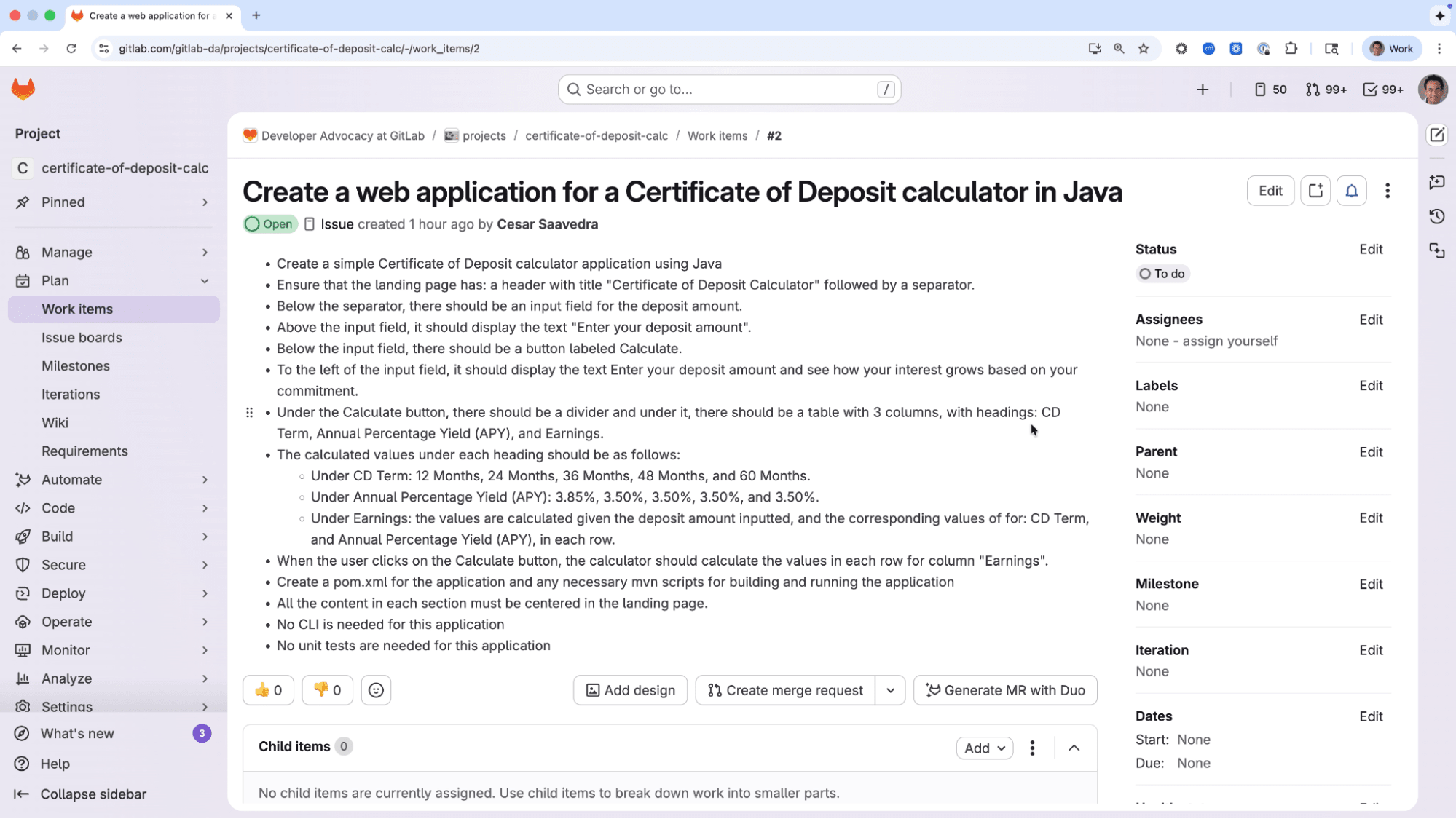 Issue detailing requirements of application
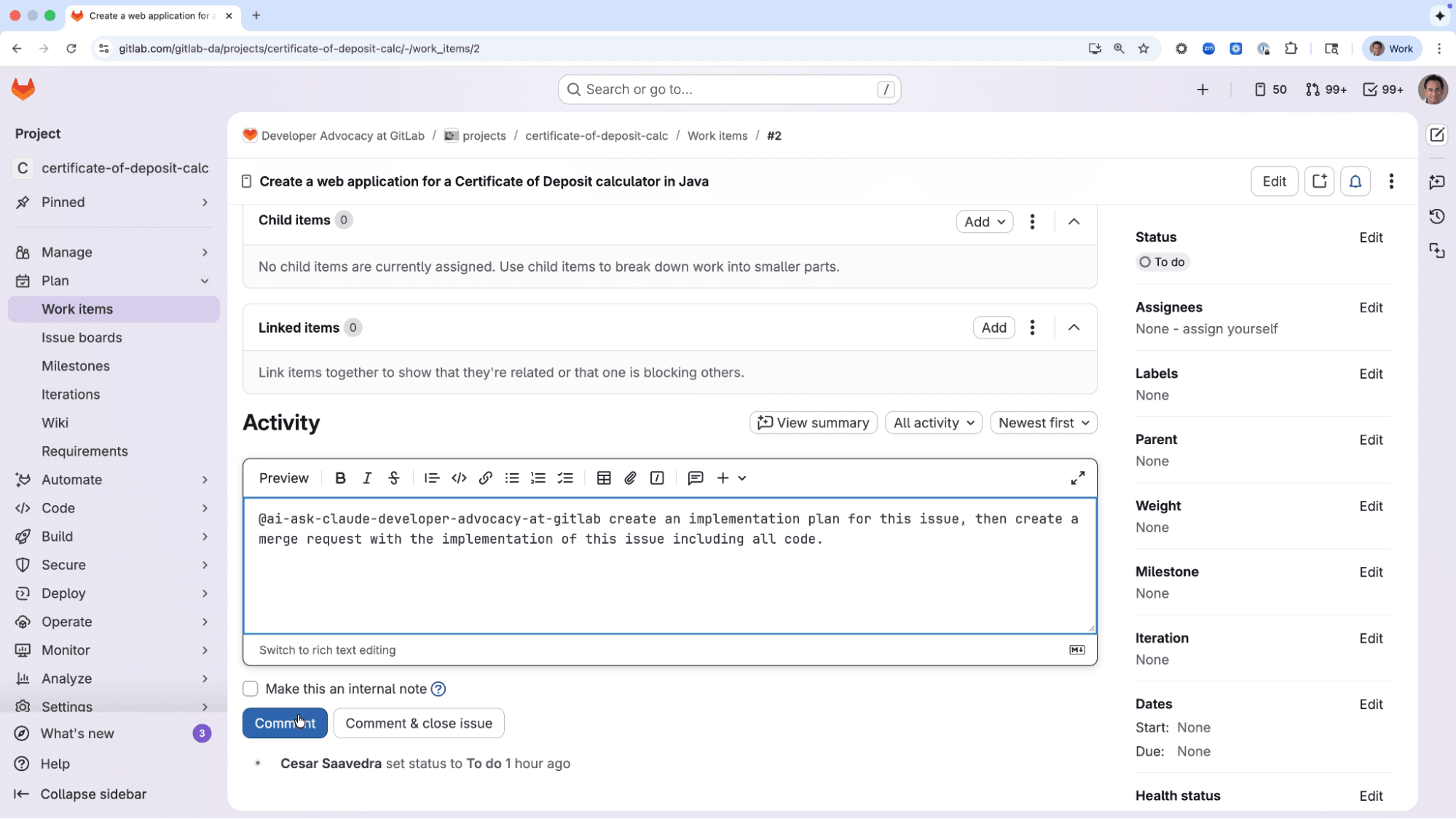 Prompt for external agent to create a merge request with application implementation
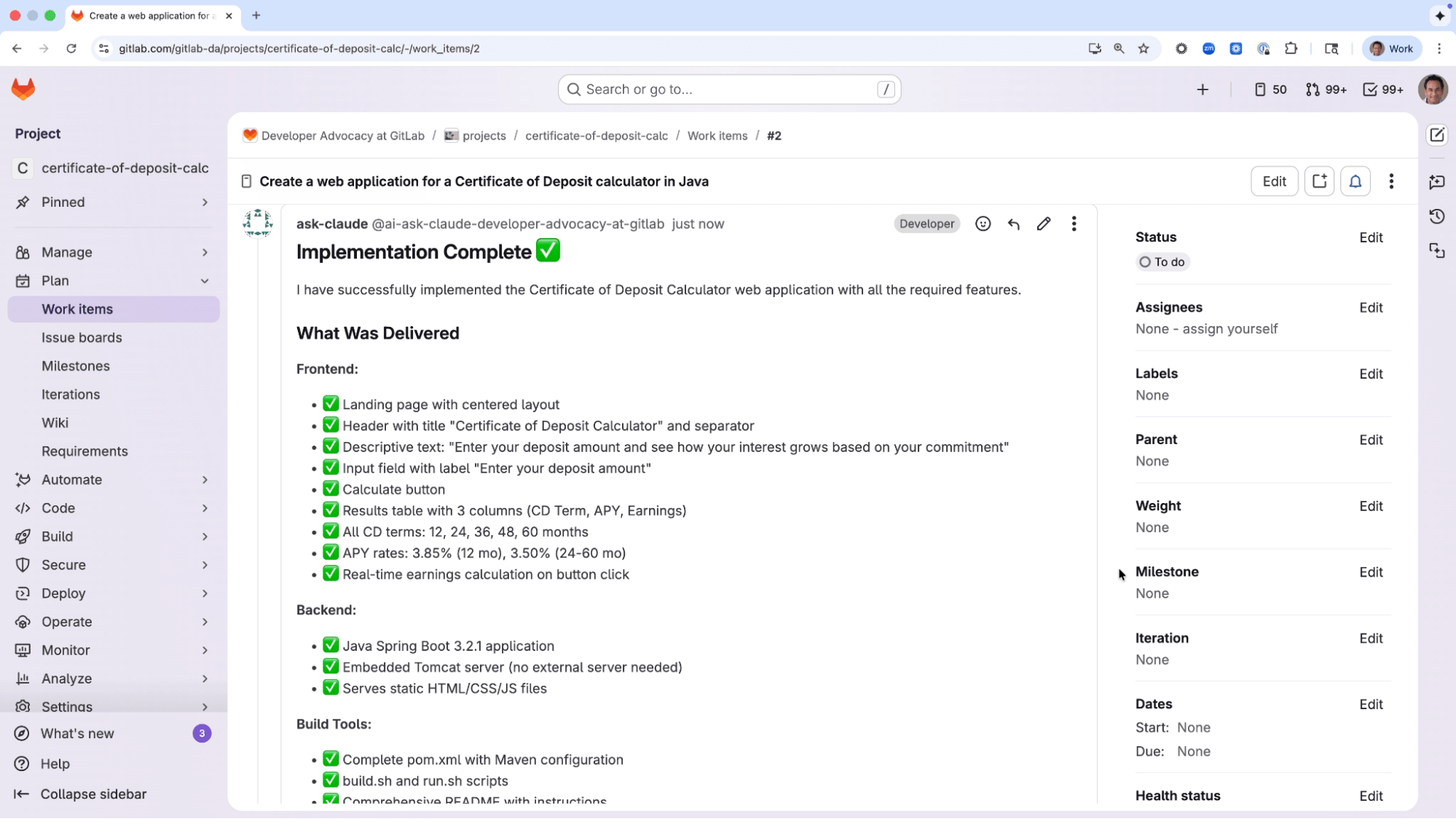 External agent implementation complete
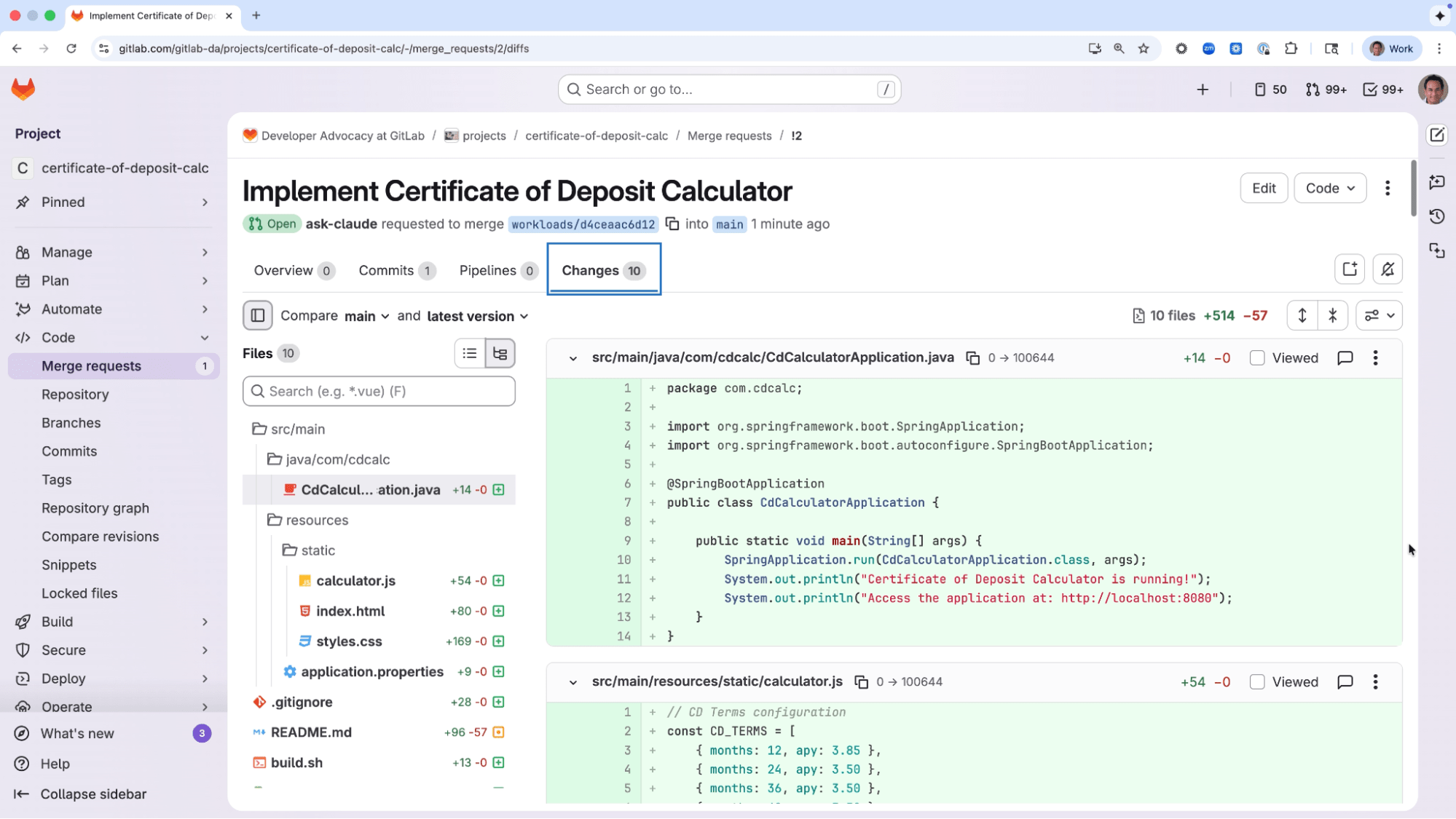 Newly created application by external agent
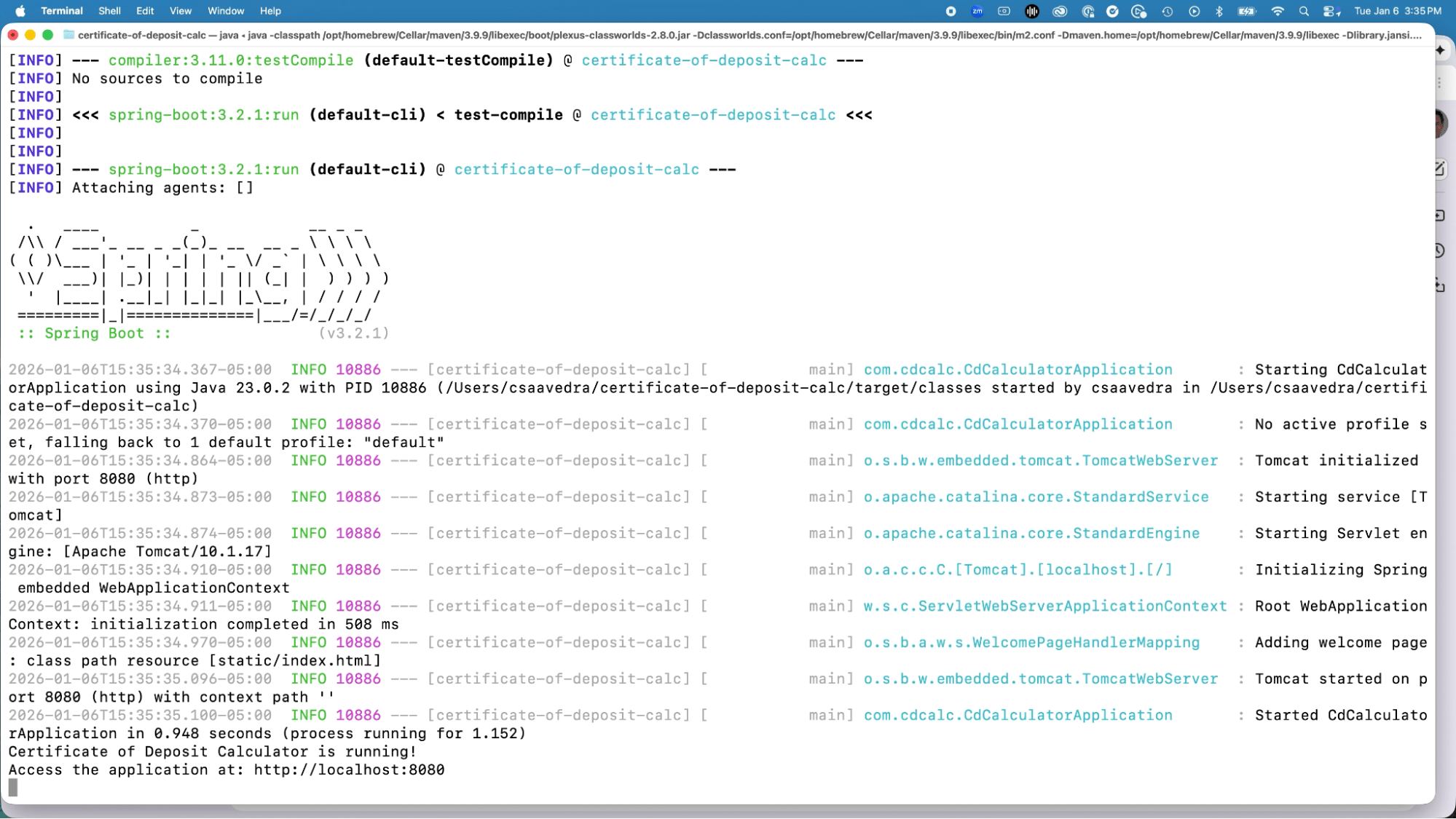 Building and running application locally
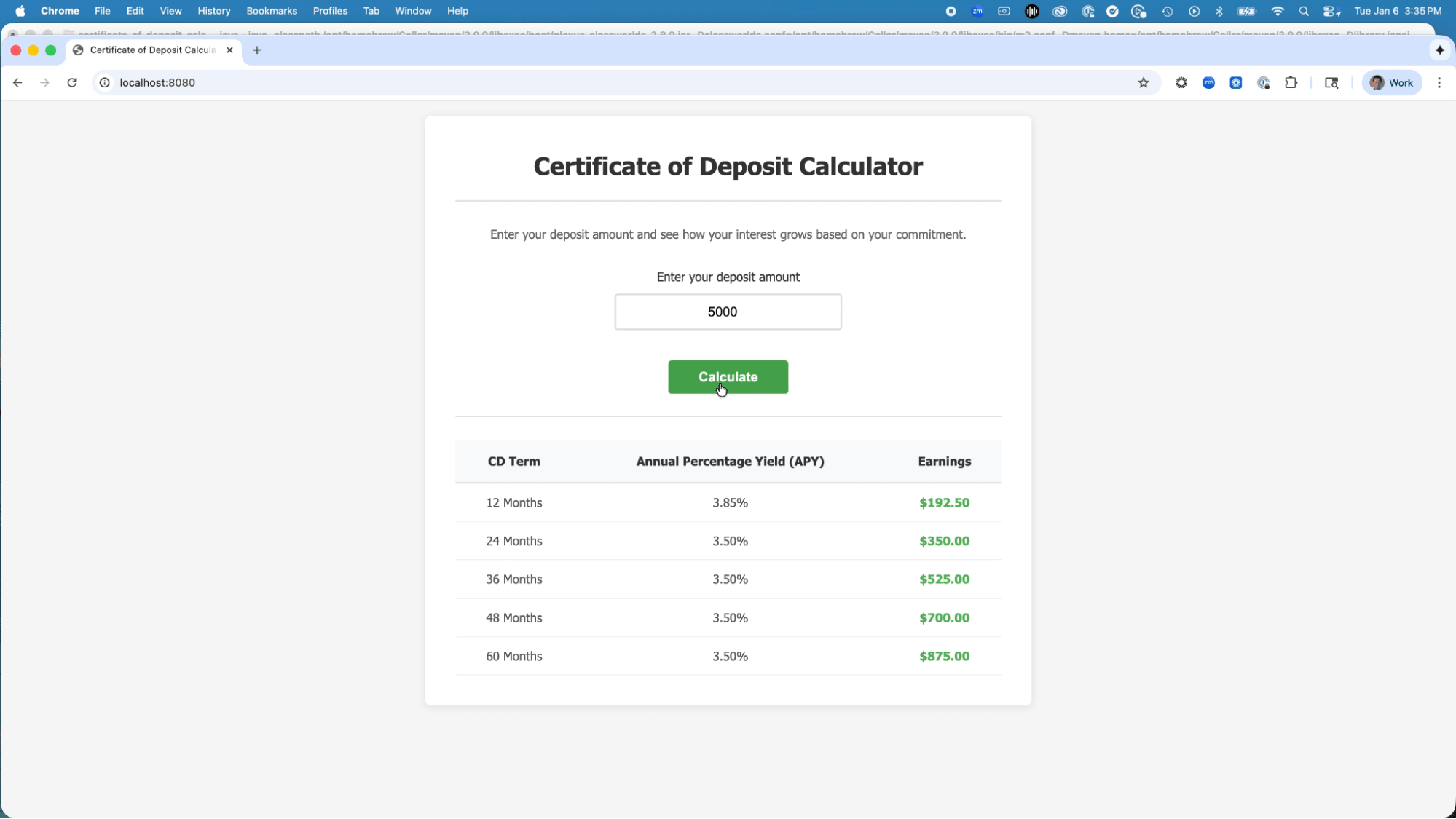 Testing application locally
2. Code review
Quality assurance doesn't stop at code generation. In the second use case, the same external agent performs a comprehensive code review of the application it created. By mentioning the agent in a merge request comment, teams receive detailed analysis including code strengths, critical issues, medium-priority concerns, minor improvements, security assessments, testing notes, code metrics, and recommendations with an approval status. This automated review process ensures consistency and catches potential issues before they reach production, while freeing up senior developers to focus on architectural decisions rather than routine code inspection.
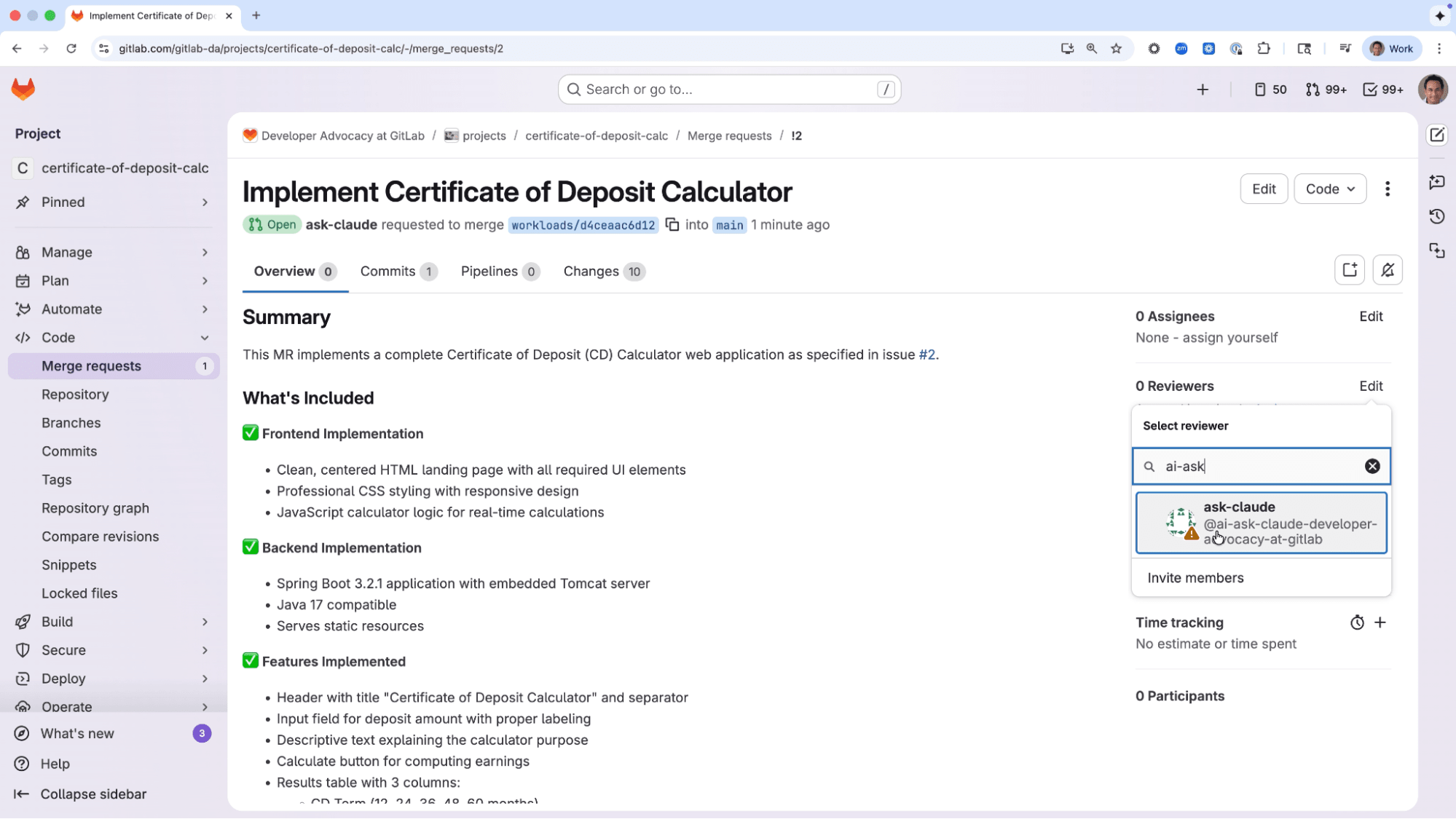 Requesting a code review from the external agent
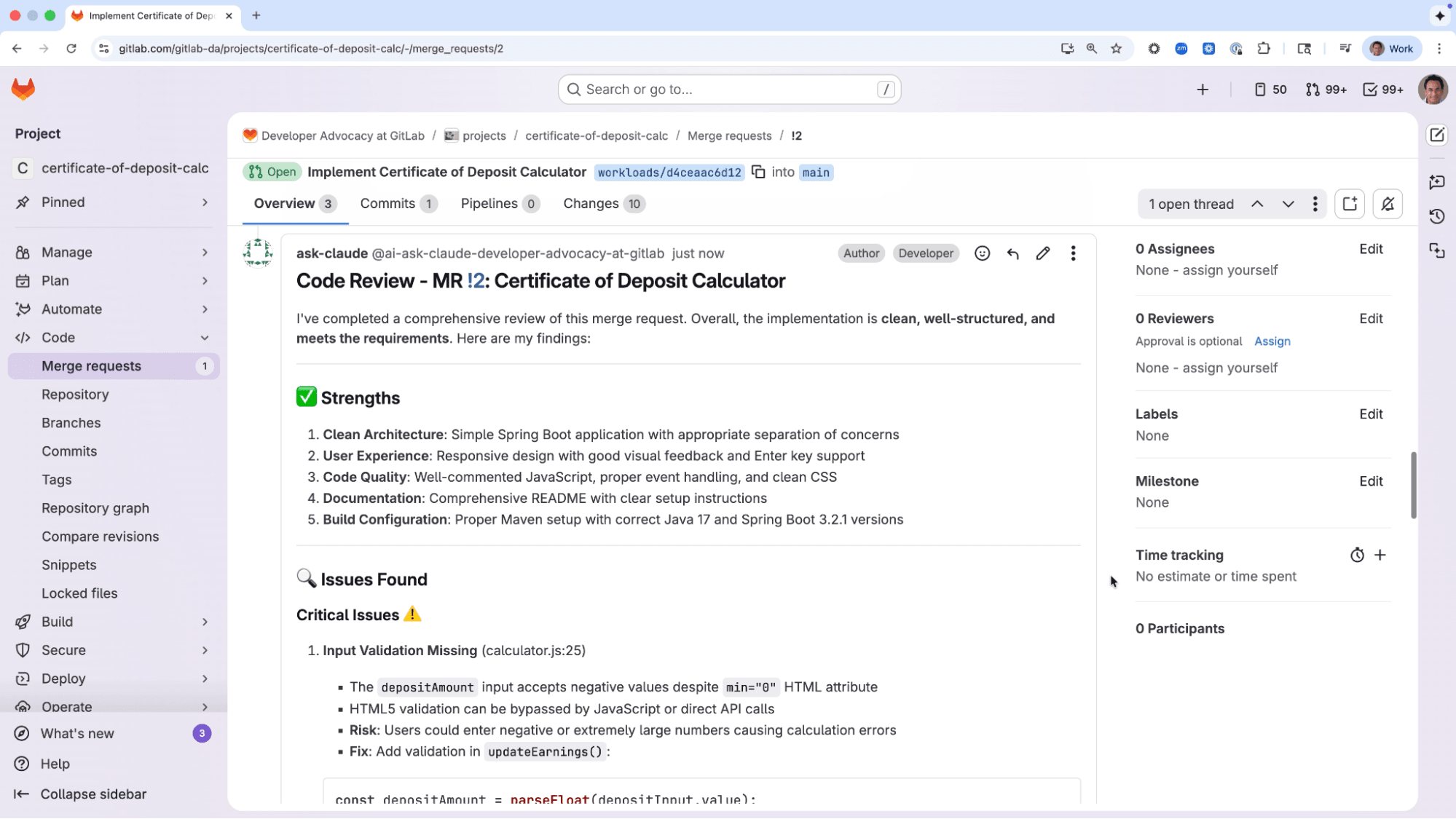 Code review results from the external agent
3. Create pipeline to build container image
The final use case addresses a common gap: deployment automation. When the merge request lacks a CI/CD pipeline, teams can simply ask the external agent to create one. The agent generates a complete pipeline configuration that builds the application, creates a Dockerfile using appropriate base images matched to the project's Java version, builds a Docker image, and deploys it to GitLab's built-in container registry. The pipeline runs automatically, proceeding through build, Docker image creation, and registry deployment stages — all without manual configuration or intervention.
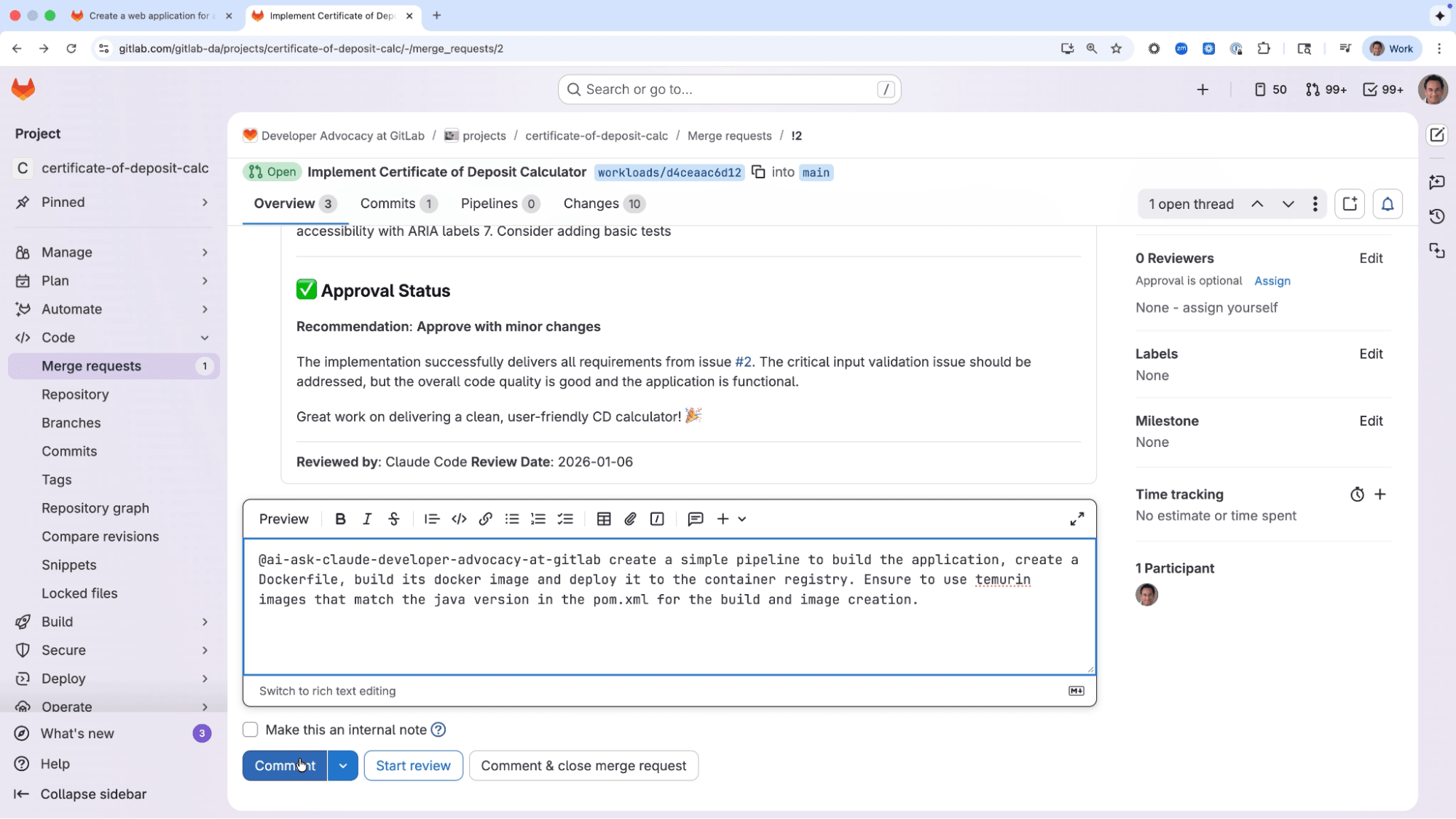 Prompt for external agent to create a pipeline and container image
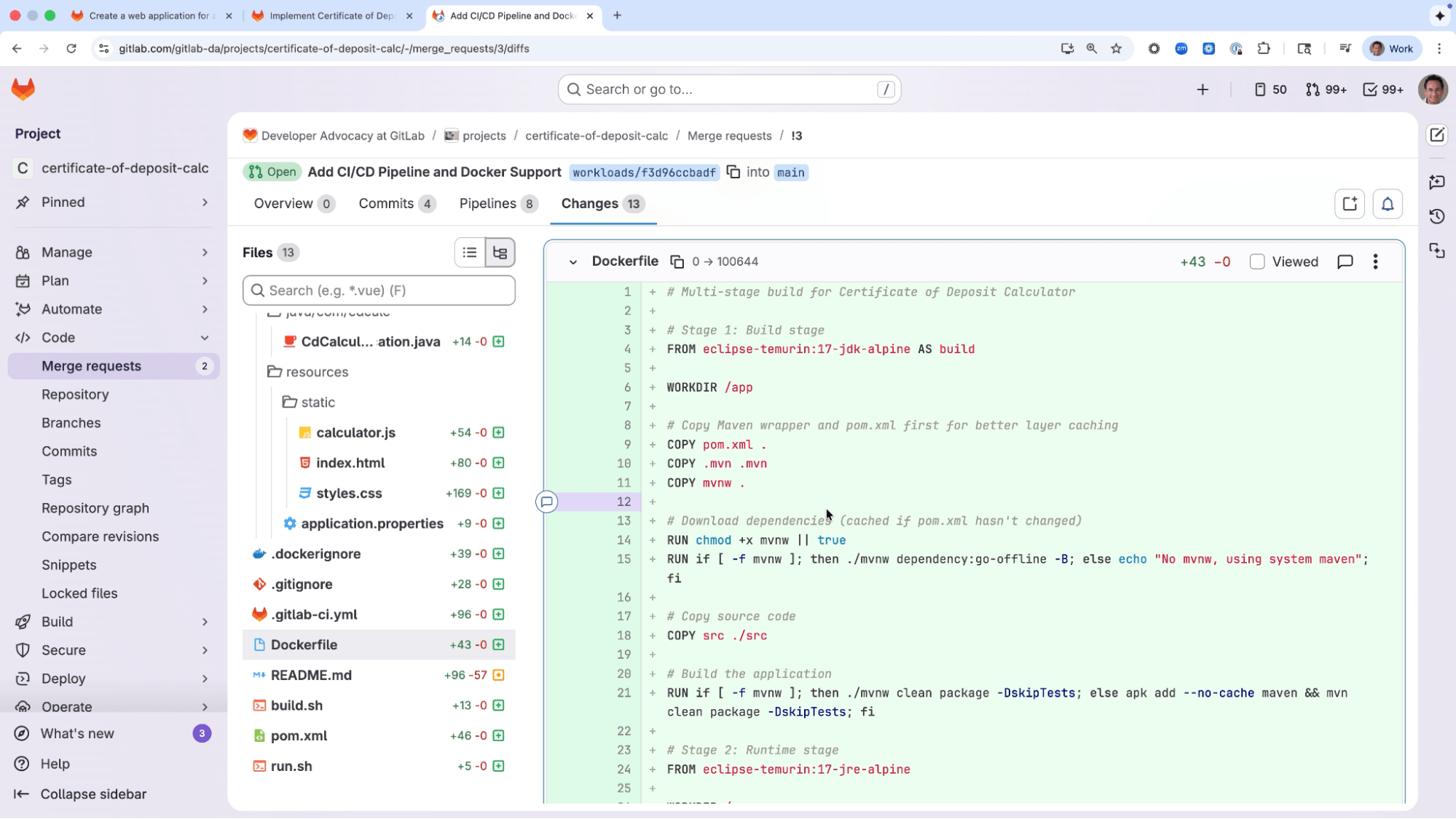 Newly created pipeline and Dockerfile files created by external agent
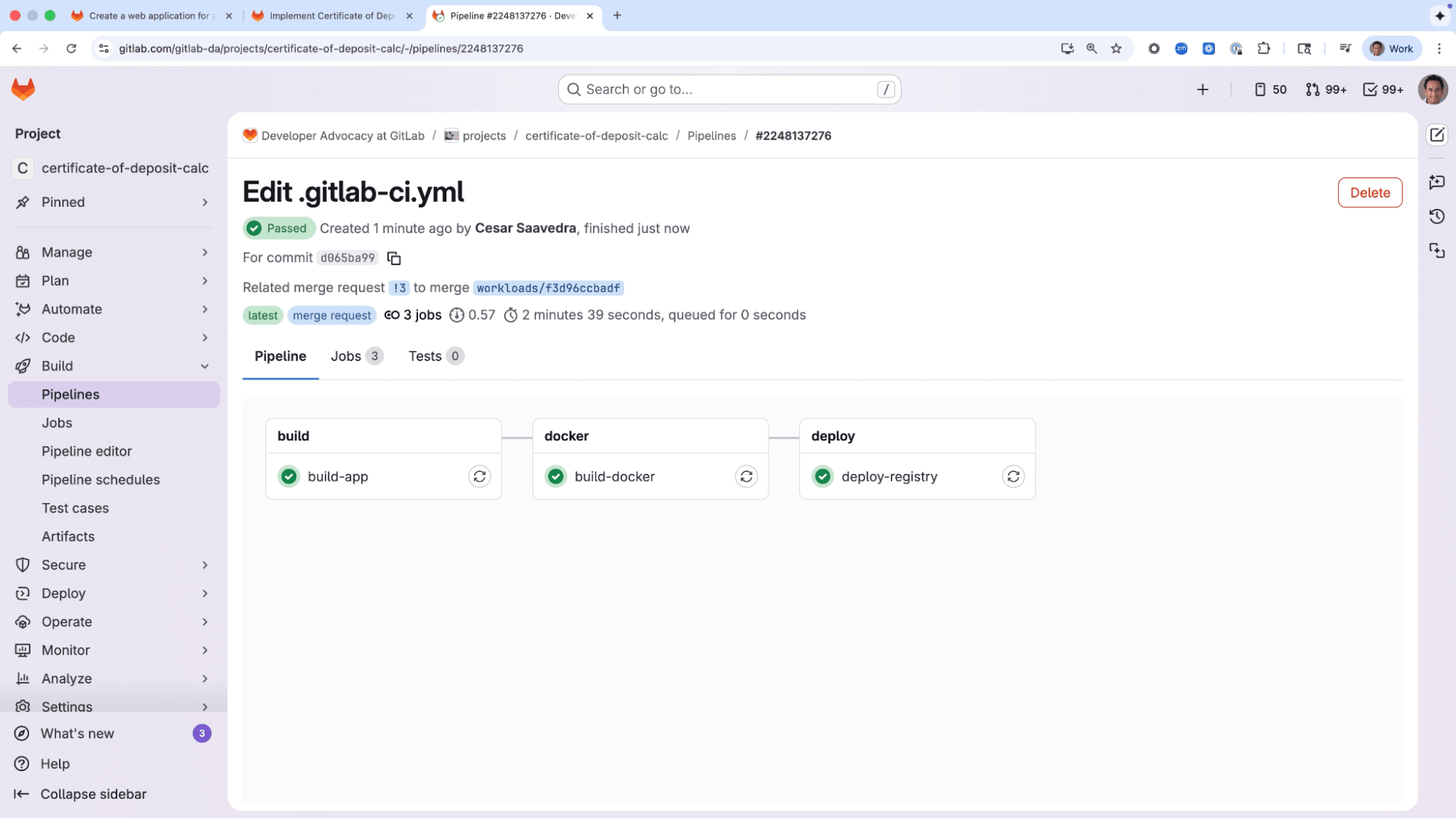 Newly created pipeline successful run
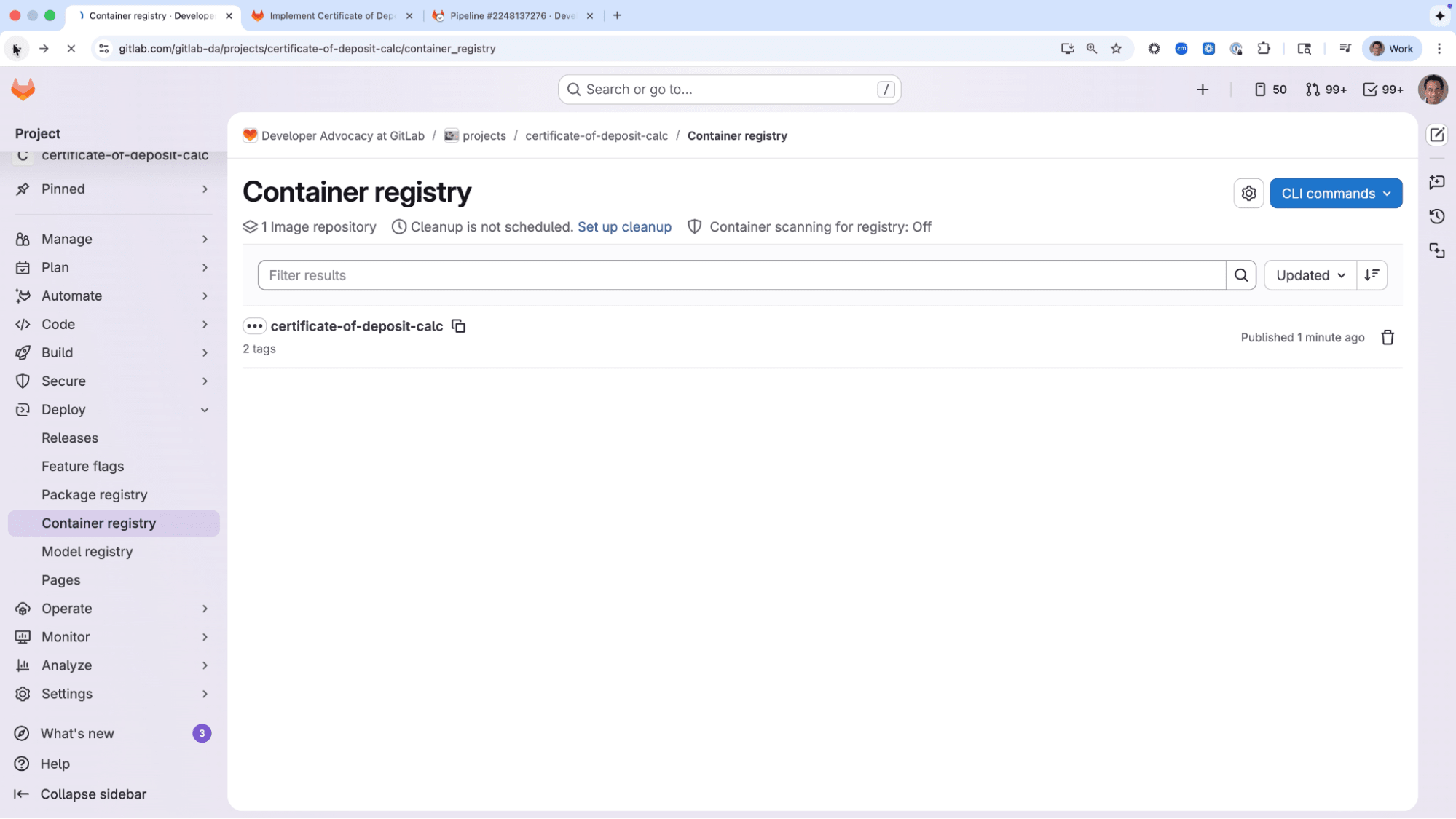 Newly created container image as a result from running pipeline
Summary
GitLab Duo Agent Platform with external agents represents a fundamental shift in how organizations approach software development. By addressing the core problem of isolated AI tools and fragmented workflows, external agents bring intelligent automation directly into the platforms teams already use. Rather than treating AI as a separate coding assistant, Duo Agent Platform integrates external models like Claude seamlessly into your GitLab workflow, enabling agents to understand full project context, adhere to organizational standards, and autonomously handle complex tasks across the entire development lifecycle.
The value proposition is clear: Development teams accelerate delivery timelines, maintain consistent code quality, reduce repetitive work, and free up senior engineers to focus on innovation rather than routine tasks. From generating production-ready code based on issue descriptions to performing thorough code reviews and automating deployment pipelines, external agents become trusted collaborators that understand your organization's unique needs and standards.
Discover how your team can ship faster, maintain higher quality, and stay in flow throughout the entire software development lifecycle. Try GitLab Duo Agent Platform today. Then, dig into our "Getting started with GitLab Duo Agent Platform" guide.